
The $1 Million Per Kilogram Problem
Shipping materials to the moon carries an astronomical price tag—literally. At costs ranging from $1 to $1.3 million per kilogram, transporting construction materials from Earth makes traditional building methods economically unfeasible for permanent lunar settlements. This staggering expense has prompted researchers at Texas A&M University to develop revolutionary construction technologies that use the moon's own resources instead.
The Texas A&M Space Institute is pioneering a fundamental shift from "flags and footprints" exploration to actual settlement construction. According to reports, their approach centers on utilizing lunar regolith—the moon's surface material—as the primary building component for permanent bases, potentially solving one of space exploration's most expensive challenges.
From Afghanistan to the Moon
The project draws expertise from an unexpected source: military construction experience. Dr. Suermann, whose background includes building military bases in Afghanistan's harsh environments, now applies lessons learned from Earth's most challenging construction sites to lunar infrastructure design. This transition from terrestrial extreme environments to space construction represents a unique convergence of military engineering and space science.
The parallels between hostile Earth environments and lunar conditions provide valuable insights for developing construction methods that can withstand the moon's extreme temperatures, radiation, and vacuum conditions while working with limited resources.
Robotic Construction Revolution
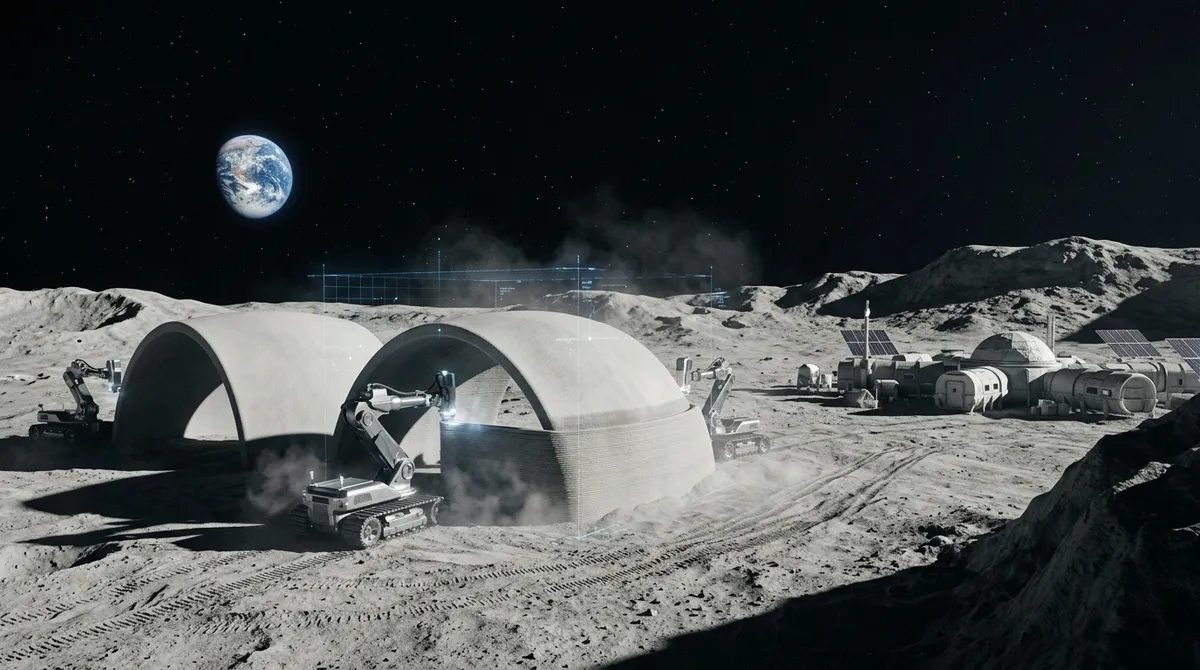
Texas A&M's approach relies heavily on advanced robotics and mixed-reality systems that enable real-time control from Earth. According to reports, engineers will use VR-controlled rovers and semi-autonomous robots to conduct construction operations on the lunar surface while remaining safely on Earth.
This mixed-reality system represents a breakthrough in remote construction technology, allowing human expertise to guide complex building processes across the 384,400-kilometer distance between Earth and the moon. The semi-autonomous capabilities ensure that construction can continue even when communication delays would make direct control impossible.
The $200 Million Testing Ground
The Texas A&M Space Institute operates as a $200 million research hub specifically designed to replicate moon and Mars surface conditions for testing construction technologies. This facility allows researchers to validate their robotics, construction methods, and regolith-processing techniques under simulated extraterrestrial conditions before deployment.
These terrestrial testing capabilities prove crucial for developing reliable systems that must function flawlessly in environments where repairs and replacements are extremely difficult or impossible. The institute's investment in realistic testing environments demonstrates the serious commitment to solving lunar construction challenges.
Regolith: Challenge and Solution
Lunar regolith presents a paradox for construction engineers—it's simultaneously the most hostile building material available and the key to sustainable lunar settlement. According to reports, regolith's properties make it difficult to work with using conventional construction methods, yet it represents the only readily available building material on the moon.
The research focuses on developing specialized processing and construction techniques that can transform this challenging material into viable building components. Success in regolith utilization could eliminate the need for expensive material shipments from Earth, making permanent lunar settlements economically feasible.
Racing Toward 2040
NASA's ambitious goal of establishing a permanent lunar base by 2040 creates urgency around these technological developments. The timeline demands rapid innovation in autonomous construction methods, robotics systems, and in-situ resource utilization techniques.
This deadline-driven research represents more than academic exercise—it's the foundation for humanity's expansion beyond Earth. The technologies being developed at Texas A&M could determine whether lunar settlement becomes reality or remains in the realm of science fiction.
Beyond Lunar Applications
While focused on moon construction, these technologies have broader implications for space exploration. The same principles of in-situ resource utilization and robotic construction could apply to Mars settlements and other extraterrestrial environments, making this research foundational for humanity's spacefaring future.
The convergence of extreme engineering, robotics innovation, and space exploration at Texas A&M represents a crucial step toward making permanent space settlement achievable and economically sustainable.