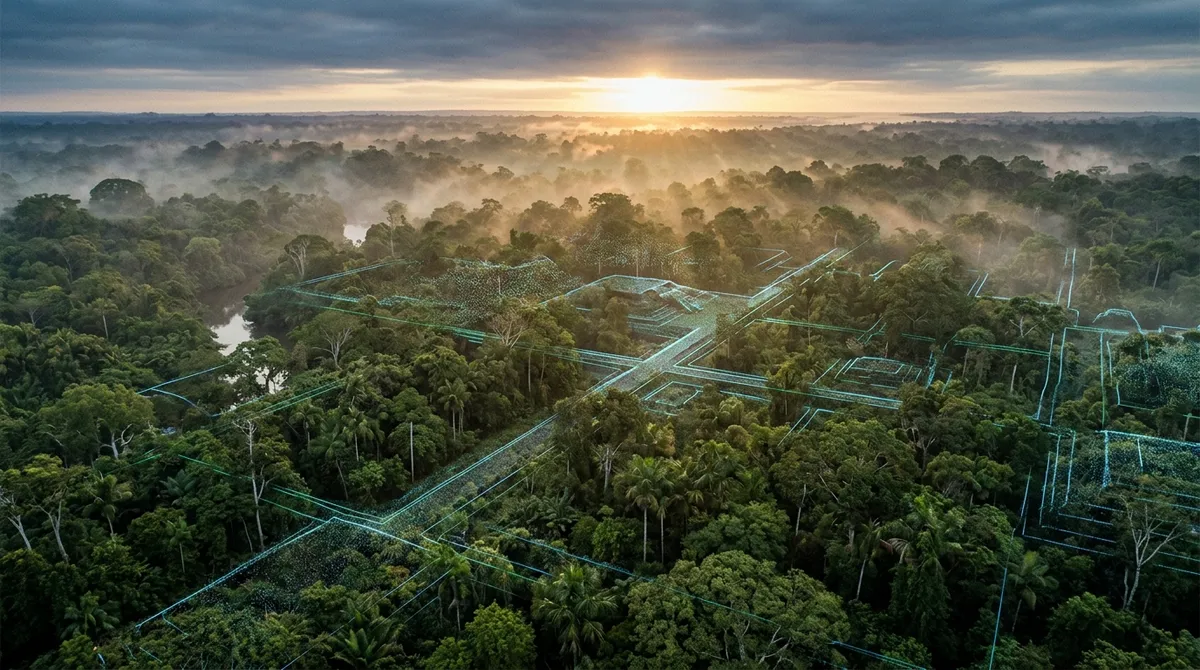
Deep beneath the dense canopy of Bolivia's Amazon rainforest lies one of archaeology's most stunning revelations. Advanced lidar technology has uncovered a vast, sophisticated civilization that challenges everything we thought we knew about pre-Columbian Amazonia.
A Lost World Emerges from Laser Light
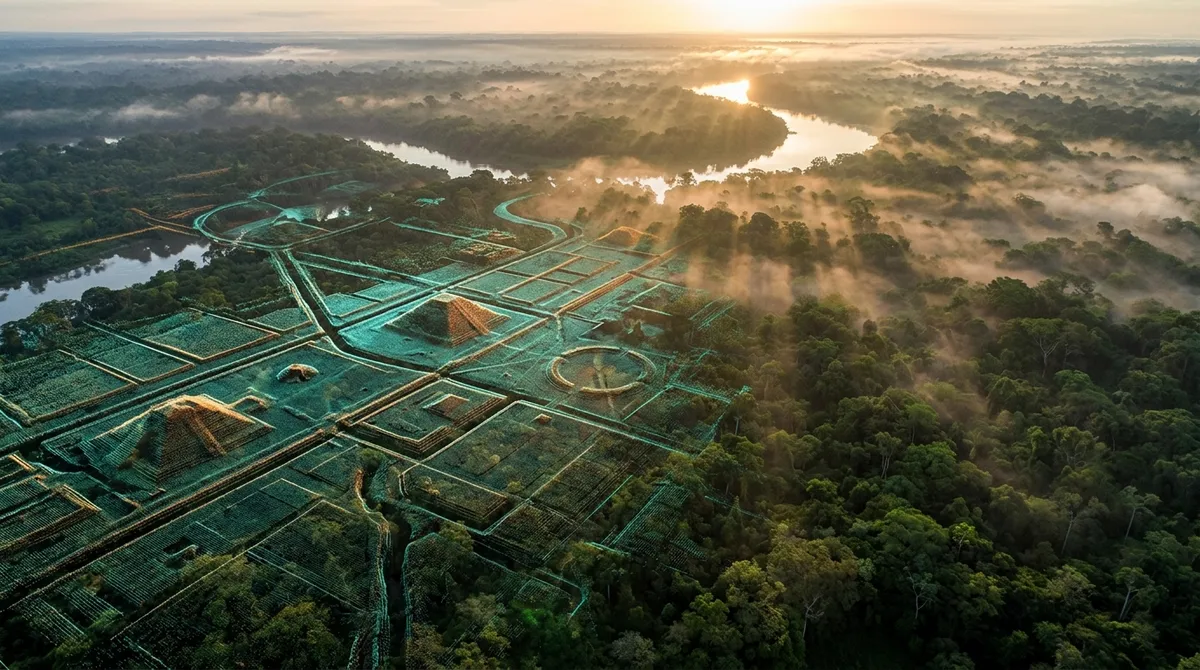
Using laser pulses that penetrate forest canopy to reveal the terrain beneath, researchers have mapped an extraordinary urbanized landscape built by the Casarabe culture between AD 500 and 1400. This ancient civilization dominated an incredible 20,000 square kilometers across northern Bolivia's Llanos de Moxos—an area roughly the size of Wales.
The discovery fundamentally rewrites the history of the Amazon, demolishing long-held assumptions about the region being sparsely populated and unmodified by human hands. What emerges instead is a picture of remarkable urban planning and engineering prowess that rivaled the great civilizations of the Andes.
Master Engineers of the Tropical Lowlands
The Casarabe people created a sophisticated four-tier settlement hierarchy that would impress modern urban planners. At the apex were primary settlements spanning up to 3 square kilometers, followed by secondary and tertiary sites, and isolated mounds scattered across the pampas.
Their architectural achievements were monumental in scale. According to reports, they built 20-meter conical pyramids and expansive U-shaped structures for public gatherings. Man-made platforms rose 5 meters high and extended over 20 hectares, creating civic-ceremonial spaces that demonstrate remarkable organizational capacity.
Perhaps most impressively, the entire network was connected by raised causeways and canals that linked forest islands across the landscape. This infrastructure enabled both transportation and sophisticated water management—crucial for thriving in the challenging tropical environment.
Sustainable Agriculture Meets Cosmic Architecture
The Casarabe civilization developed an intricate drained-field agriculture system with maize as their primary crop, supplemented by diverse secondary crops. Their water-management prowess extended to reservoirs and farm ponds that sustained communities through dry seasons.
Remarkably, major architectural features and burial sites were oriented north-northwest, according to reports, suggesting that cosmological beliefs influenced their engineering and urban planning. This integration of spirituality and infrastructure reveals a culture that saw no separation between the practical and the sacred.
The civilization also created Amazonian Dark Earths—engineered soils that combined charcoal, bone, and waste with native soil. These fertile patches demonstrate sophisticated understanding of soil science that modern agriculturalists are only beginning to appreciate.
Rewriting Amazonian History
This discovery arrives at a crucial moment as climate change and deforestation intensify global focus on the Amazon's ecological and cultural significance. The findings challenge persistent colonial-era myths about the Amazon being "untamed wilderness" and reveal instead a landscape shaped by indigenous innovation for nearly a millennium.
The Casarabe settlements represent what researchers term "low-density tropical urbanism"—a model distinct from compact Andean cities like Tiwanaku. This approach allowed large populations to thrive while maintaining ecological balance, offering potential lessons for modern sustainable development.
Technology Reveals Ancient Wisdom
Lidar technology has become archaeology's game-changer, allowing researchers to peer through dense vegetation that has hidden these remarkable sites for centuries. The laser-based mapping reveals that Amazonian peoples developed sophisticated urban planning, early ceramic manufacturing, and plant domestication dating back to the end of the Ice Age.
These discoveries join growing evidence from Maya and Angkor civilizations, showing that low-density tropical urbanism was a successful strategy across multiple ancient cultures. The pattern suggests that indigenous peoples developed sustainable ways of creating large settlements without the environmental destruction often associated with modern cities.
Beyond Colonial Assumptions
The revelation fundamentally challenges 20th-century archaeological assumptions about the Amazon's capacity for large settlements. What Western science long dismissed as impossible—sophisticated indigenous civilizations thriving in tropical lowlands—has been proven spectacularly wrong.
For indigenous communities, these landscapes were never truly "lost." The discovery represents not just archaeological triumph but a long-overdue recognition of indigenous knowledge and capability that colonial perspectives systematically undervalued.
As researchers continue mapping this ancient urban network, each new revelation adds complexity to our understanding of pre-Columbian America. The Casarabe culture demonstrates that the Amazon has always been home to remarkable human achievement—we simply needed better tools to see it.