A Milestone 45 Years in the Making
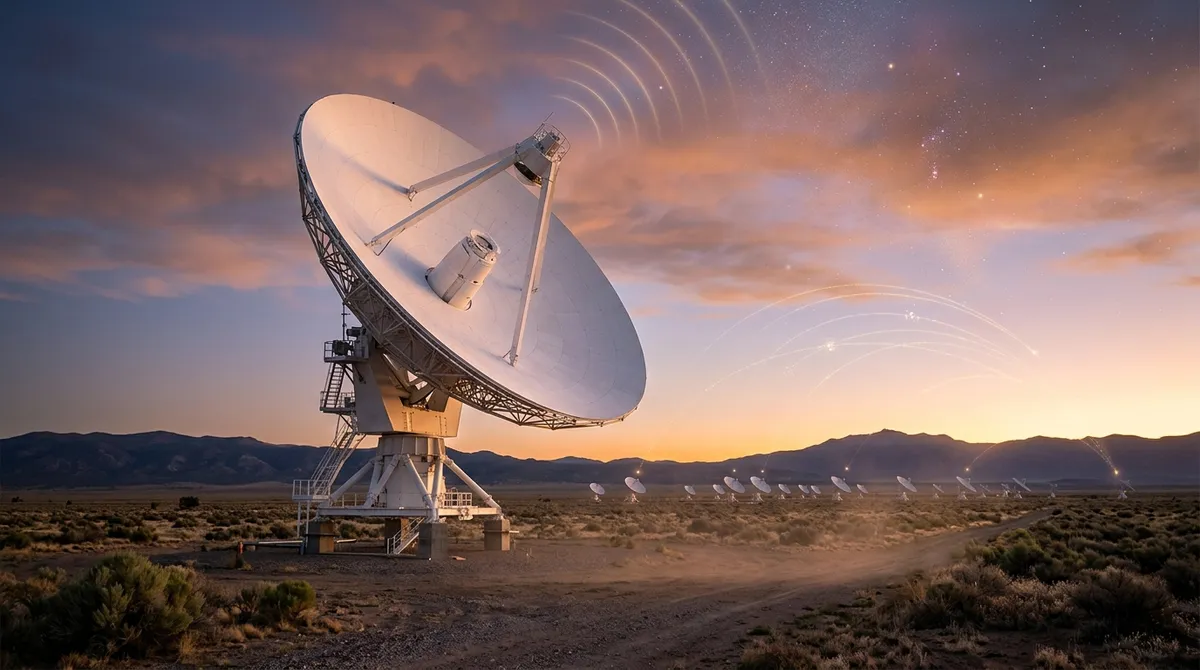
After decades of service, the iconic Very Large Array in New Mexico is preparing to pass the torch to its successor. The next-generation Very Large Array (ngVLA) prototype antenna has achieved a crucial milestone: "first light," marking the transition from construction to astronomical testing phase.
According to reports, this breakthrough represents more than just turning on a new piece of equipment. The prototype has successfully made independent observations while collaborating with the existing NSF VLA's 27 antennas, proving that old and new technology can work seamlessly as a unified system.
Engineering Feat Validates Revolutionary Design
The successful integration of the prototype with the existing array validates the engineering design for what promises to be a game-changing astronomical instrument. The planned ngVLA will feature 244 antennas, creating a radio telescope system 10 times more sensitive than current instruments.
This sensitivity increase isn't just an incremental improvement—it represents a quantum leap in our ability to peer into the cosmos. The enhanced capabilities will allow astronomers to detect fainter signals and observe cosmic phenomena with unprecedented clarity and resolution.
What the Universe Will Reveal
With 10 times better sensitivity and resolution than existing radio telescopes, the ngVLA is positioned to unlock cosmic mysteries that current instruments simply cannot access. According to reports, the enhanced capabilities will enable new discoveries about black holes, galaxies, and other cosmic phenomena.
Radio astronomy plays a crucial role in modern space science, complementing space-based observatories by detecting different types of electromagnetic radiation. While optical telescopes show us the visible universe, radio telescopes reveal hidden structures, track cosmic magnetic fields, and monitor high-energy processes across vast distances.
More Than Just Science
The ngVLA project represents a major U.S. investment in scientific infrastructure, positioning America as a leader in next-generation astronomy. But the benefits extend beyond scientific discovery. According to reports, the project is delivering significant economic benefits to New Mexico through job creation and research opportunities.
This economic impact reflects a broader trend where major science projects serve dual purposes: advancing human knowledge while stimulating local economies through construction jobs, ongoing operations, and educational partnerships.
The Next Frontier in Radio Astronomy
As radio astronomy enters a new era, the aging 45-year-old VLA prepares to be superseded by more powerful technology. The successful first light of the ngVLA prototype signals that this transition is moving from concept to reality.
The achievement also carries cultural resonance, connecting to the legacy of Carl Sagan and the iconic film "Contact," which showcased radio astronomy's role in humanity's search for cosmic understanding. The VLA's distinctive array of dish antennas became symbols of our quest to listen to the universe.
From Prototype to Array
The successful collaboration between the prototype and existing antennas proves that the ngVLA concept can work in practice, not just on paper. This validation is crucial for a project of this scale, where 244 antennas must function as a coordinated whole.
The engineering challenge involves not just building individual antennas, but creating a distributed instrument where signals from across the array combine to create a single, ultra-sensitive "eye" on the sky. The prototype's successful integration demonstrates that this complex coordination is achievable.
Looking Forward
The ngVLA prototype's first light marks the beginning of an extensive testing and validation phase. As astronomers begin using the prototype alongside existing instruments, they'll gather crucial data about performance, capabilities, and potential discoveries.
This milestone brings us closer to a future where radio astronomy can probe deeper into space and time than ever before, potentially revolutionizing our understanding of cosmic evolution, stellar formation, and the fundamental processes that shape our universe.