Dragon Departs the ISS After CRS-34 Mission
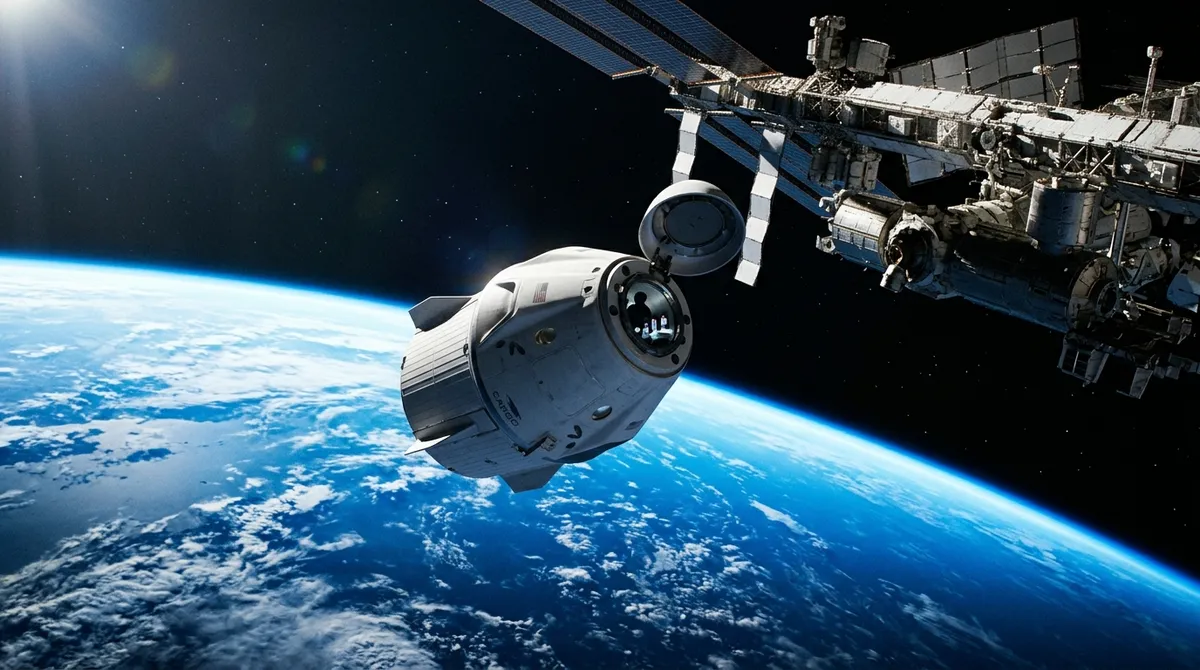
SpaceX's Dragon cargo capsule is set to leave the International Space Station today, June 16, wrapping up NASA's CRS-34 commercial resupply mission. According to reports, the robotic freighter is scheduled to undock at approximately 12:05 p.m. EDT (1605 GMT), with a Pacific Ocean splashdown targeted for June 17.
For space enthusiasts, this is one of the more visually compelling events in the ISS calendar — a live undocking followed by a fiery atmospheric reentry and an ocean splashdown. But beyond the spectacle, Dragon's return trip carries something that few spacecraft in operation can offer: a safe ride home for irreplaceable scientific cargo.
Why Dragon's Return Capability Is a Big Deal
Not all cargo ships are created equal. Dragon holds a unique distinction among spacecraft currently serving the ISS — it is the only operational ISS cargo spacecraft capable of safely returning experiments and equipment back through Earth's atmosphere.
Other resupply vehicles burn up on reentry, making them essentially one-way delivery trucks. Dragon functions more like a round-trip courier, and that return capability is what makes the CRS-34 splashdown genuinely significant for the research community.
Scientists on the ground depend on Dragon to retrieve time-sensitive biological samples, hardware, and experimental results that simply cannot be transmitted digitally. When Dragon splashes down in the Pacific, it is not just a spacecraft coming home — it is a floating laboratory returning months of orbital research.
What Science Is Coming Back to Earth?
The CRS-34 mission is bringing back a range of research materials that reflect the broad ambitions of ISS science. According to reports, the returning cargo includes bioprinted tissues, cancer-treatment materials, cryogenic fuel storage experiments, and data related to astronaut health.
Each of these research areas connects to goals that extend well beyond low Earth orbit. Bioprinted tissues studied in microgravity behave differently than those produced on the ground, offering insights that could reshape regenerative medicine. Cancer-treatment research conducted aboard the ISS benefits from the unique conditions of space, where certain cellular processes are easier to observe and manipulate.
Cryogenic fuel storage research is particularly forward-looking. Storing super-cooled propellants in space is one of the key engineering challenges facing future deep-space missions, including eventual crewed trips to the Moon and Mars. Experiments returning on CRS-34 contribute directly to solving that problem.
Astronaut health research is another cornerstone of the ISS program. Understanding how the human body changes during long-duration spaceflight — from bone density loss to cardiovascular changes — is essential for planning missions that go far beyond the station's orbit.
How to Watch the Undocking and Splashdown
SpaceX and NASA typically provide live coverage of Dragon undocking events through their respective online channels, making it accessible to anyone with an internet connection. The undocking window on June 16 offers a real-time look at orbital mechanics in action, as Dragon uses its thrusters to gently separate from the station and begin its journey home.
The splashdown on June 17 completes the loop. Recovery teams will be on standby in the Pacific to retrieve the capsule and its cargo as quickly as possible, preserving the integrity of the science samples aboard.
Dragon and the Future of Deep-Space Research
NASA's commercial resupply program, of which SpaceX's Dragon is a central pillar, represents a shift in how space agencies approach orbital logistics. By partnering with private companies, NASA has been able to maintain a steady flow of supplies and science to the ISS while freeing up resources for longer-range exploration goals.
Dragon's combination of cargo delivery and sample return makes it an especially valuable asset in that ecosystem. Each successful CRS mission builds institutional knowledge about operating reliable cargo pipelines to and from space — knowledge that will be critical when humanity eventually needs to sustain crews on the Moon or during transit to Mars.
The CRS-34 mission is a reminder that the ISS is not just a symbol of international cooperation in space — it is an active laboratory producing research with real-world applications. And Dragon, splashing down in the Pacific on June 17, is the vessel bringing that research home.
Keep an eye on NASA and SpaceX channels for live coverage of today's undocking event.