The Forest Was Hiding Something Enormous
For centuries, the Amazon was dismissed by Western explorers and scientists as a wild, sparsely populated wilderness — a place too harsh and unforgiving to have ever supported large, complex societies. That narrative is now crumbling, laser pulse by laser pulse.
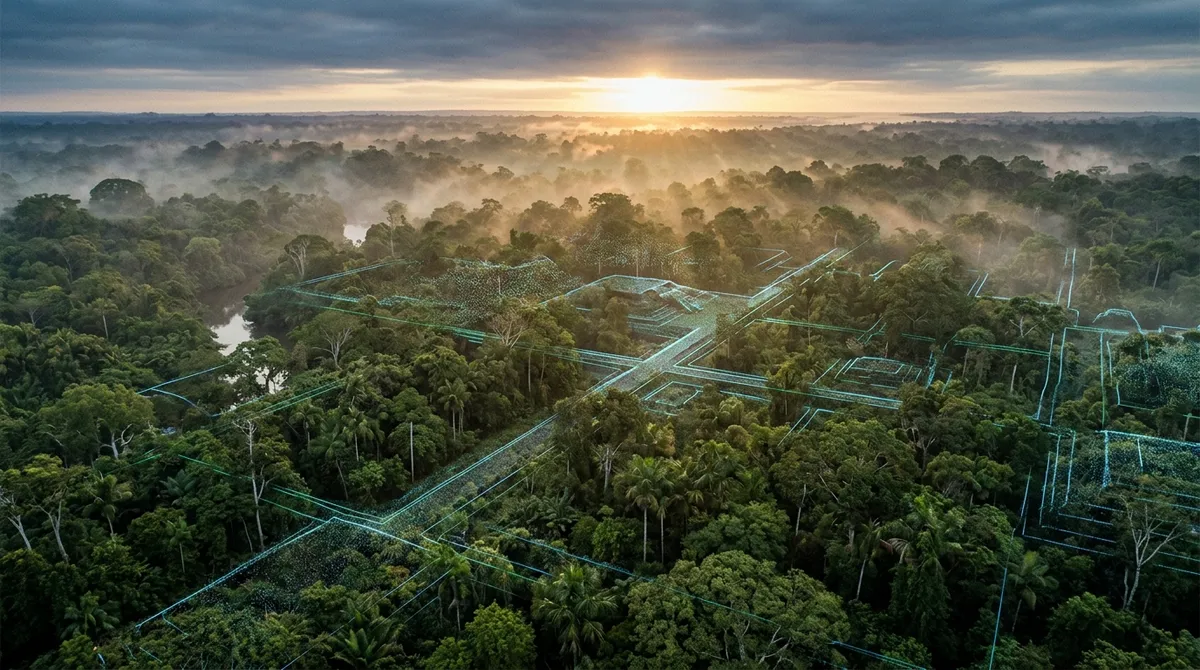
Using lidar technology — a remote sensing method that fires laser pulses through dense forest canopy to map the terrain beneath — researchers have uncovered a sweeping, sophisticated urban landscape in Bolivia's Llanos de Moxos region. What they found is rewriting the history of pre-Columbian civilization in the Americas.
Meet the Casarabe Culture
The civilization responsible for this hidden world is known as the Casarabe culture, which flourished from approximately AD 500 to 1400 — nearly a full millennium. Their territory stretched across an estimated 20,000 square kilometers in what is now northern Bolivia, a scale that places them among the most expansive pre-Columbian societies ever documented in the Amazon.
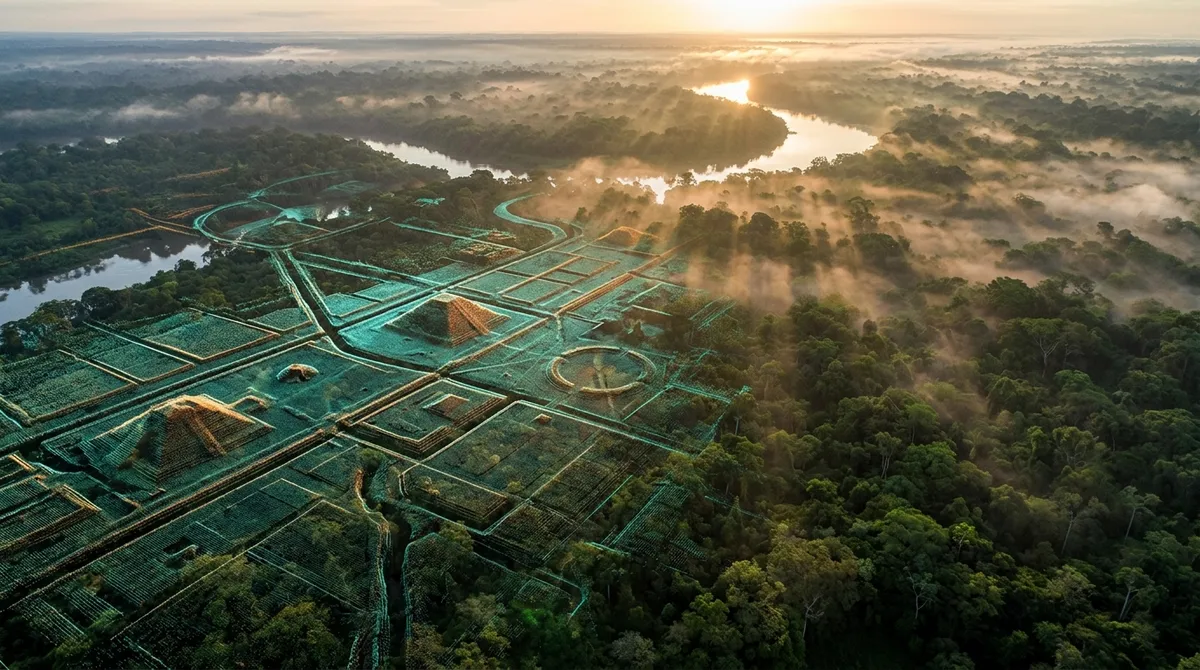
Far from living in isolated villages, the Casarabe people built an interconnected, urbanized landscape organized around a clear four-tier settlement hierarchy. At the top sat large primary settlements covering up to 3 square kilometers. Below those came secondary and tertiary sites, with isolated mounds scattered across the open pampas completing the network.
These weren't simple earthworks. According to reports, the Casarabe constructed 20-meter conical pyramids, U-shaped public gathering structures, and man-made platforms rising 5 meters and extending over 20 hectares. Raised causeways and canals connected forest islands across the landscape, forming an engineered web of infrastructure that would impress engineers today.
Engineering a World from the Ground Up
What makes the Casarabe achievement even more remarkable is how deeply they shaped the land itself. Their agricultural system relied on drained fields, with maize as the primary crop alongside a diverse range of secondary crops. To survive the dry season, they engineered water-management systems that included reservoirs and farm ponds — a deliberate, planned approach to an environment most outsiders considered uncontrollable.
They also created what archaeologists call Amazonian Dark Earths — engineered soils combining charcoal, bone, and organic waste with native soil to dramatically boost fertility. This wasn't accidental. It was deliberate land management on a civilizational scale.
Evidence also points to plant domestication in Amazonia stretching back to the end of the Ice Age, along with early ceramic manufacturing by Amazonian peoples — further dismantling the outdated image of the region's inhabitants as simple hunter-gatherers.
Cities Aligned to the Cosmos
One of the most striking details to emerge from the lidar data is how the Casarabe oriented their built environment. Major architectural features and burial sites appear aligned to the north-northwest, suggesting that cosmological beliefs directly shaped how cities were planned and constructed. In this way, the Casarabe echo other ancient civilizations — from Egypt to Mesoamerica — where the heavens guided earthly design.
Yet their urban model was distinctly their own. Researchers describe it as "low-density tropical urbanism" — a sprawling, dispersed network rather than the compact, densely packed cities associated with Andean civilizations like Tiwanaku. This style of settlement actually has parallels elsewhere in the ancient world. The Maya lowlands and the Khmer empire's city of Angkor are cited as comparable low-density tropical urban landscapes, suggesting this may have been an effective and widespread adaptation to tropical environments.
Why This Discovery Matters Now
The timing of these revelations is significant. As climate change accelerates and deforestation continues to strip away the Amazon at alarming rates, understanding the deep history of human habitation in the region carries urgent weight.
This discovery fundamentally challenges colonial-era myths that cast the Amazon as untouched wilderness. In reality, indigenous peoples engineered this landscape for centuries — managing water, enriching soils, building monuments, and organizing complex societies. Outsiders dismissed this history; the descendants of these civilizations never forgot it.
The Casarabe story also offers something rare: a practical model of how humans once built thriving communities in a challenging tropical environment without destroying it. At a time when sustainable development in the Amazon is desperately needed, that's not just history — it's a potential blueprint.
Lidar: Archaeology's Game-Changer
None of this would have been visible without lidar. Dense forest canopy had concealed these structures for generations of researchers working on the ground. By firing millions of laser pulses from aircraft and measuring how they bounce back, lidar strips away the vegetation digitally, exposing the true shape of the land beneath.
The technology has already transformed our understanding of Maya cities in Guatemala and ancient settlements across Southeast Asia. Now it's doing the same for the Amazon — and there's every reason to believe more hidden worlds are still waiting to be found beneath the canopy.