The Sun's Lonely Status in Our Cosmic Neighborhood
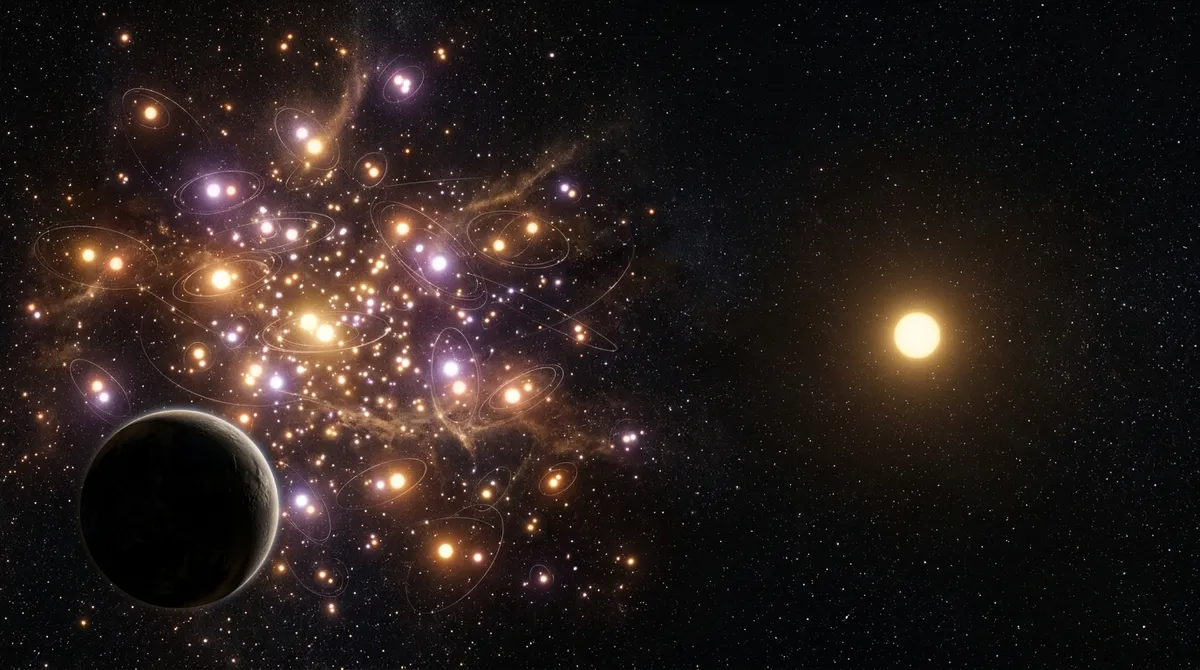
Our sun might be more of a cosmic oddball than we previously understood. According to a new comprehensive study published on arXiv, our solitary star stands out in a galaxy where most stellar objects prefer company. This groundbreaking research has created what scientists describe as a near-complete census of multiple star systems within 10 parsecs of Earth, revealing fascinating patterns about stellar companionship that could reshape how we search for alien worlds.
The study identified 424 stellar and sub-stellar objects organized into 92 bound multi-star systems in our immediate cosmic neighborhood. The findings paint a clear picture: while our sun travels through space alone, the majority of its stellar neighbors are locked in gravitational dances with companion stars.
Mass Matters in Stellar Relationships
One of the most striking discoveries from this census is how a star's mass dramatically influences its likelihood of having companions. According to the research, higher-mass stars are far more likely to exist in multiple star systems, while their smaller counterparts—red dwarfs and brown dwarfs—typically remain solitary.
This pattern suggests that massive stars "travel in packs," as the study describes it, while tiny stars prefer the solo life. The gravitational dynamics that lead to these arrangements likely formed during the early stages of stellar birth, when gas clouds collapsed and fragmented in star-forming regions.
Some of these stellar partnerships involve incredibly long-term relationships, with binary stars orbiting each other over periods spanning millions of years. These cosmic couples challenge our Earth-centric view of what constitutes a "normal" stellar system.
Implications for the Hunt for Earth-Like Planets
The timing of this census couldn't be more crucial for astronomy. Next-generation exoplanet missions, including NASA's planned Habitable Worlds Observatory and ESA's LIFE mission, are gearing up to search for potentially habitable worlds around nearby stars. However, binary star systems present significant complications for these searches.
When stars have hidden companions, it can sabotage planet detection efforts and waste precious observation time. The gravitational influence of a companion star can disrupt planetary formation or create complex orbital dynamics that make it difficult to identify Earth-like worlds. By mapping which local stars are truly single, paired, or part of complex systems, this new census provides mission planners with the clean target lists they desperately need.
Our Sun: The Exception, Not the Rule
The research reinforces a counterintuitive reality about our solar system: our sun's solitary status makes it relatively unusual in our galactic neighborhood. This "our sun is the weird one" revelation adds another layer to the ongoing discussion about what makes Earth and our solar system potentially unique in the cosmos.
While we've long known that binary and multiple star systems are common, this detailed local census provides unprecedented clarity about just how prevalent stellar companionship really is. The study suggests that single stars like our sun represent a minority population among stellar objects.
Looking Forward: Better Maps for Better Science
This comprehensive mapping of our stellar neighborhood represents more than just an academic exercise—it's a practical tool for future space science missions. As astronomers prepare to deploy increasingly sophisticated instruments capable of directly imaging Earth-like exoplanets, knowing which nearby stars offer the cleanest observational opportunities becomes crucial.
The census also opens new questions about stellar formation and evolution. Understanding why some stars end up with companions while others remain alone could provide insights into the conditions present in star-forming regions billions of years ago.
As we continue to explore our cosmic neighborhood and search for signs of life beyond Earth, this stellar census serves as a reminder that our solar system's configuration—with its single star and stable planetary orbits—may be less typical than we once assumed. In a universe where most stars share their space with companions, our sun's solitary journey through the galaxy makes it, and potentially us, more unique than ever.