The Sun's Hidden Symphony
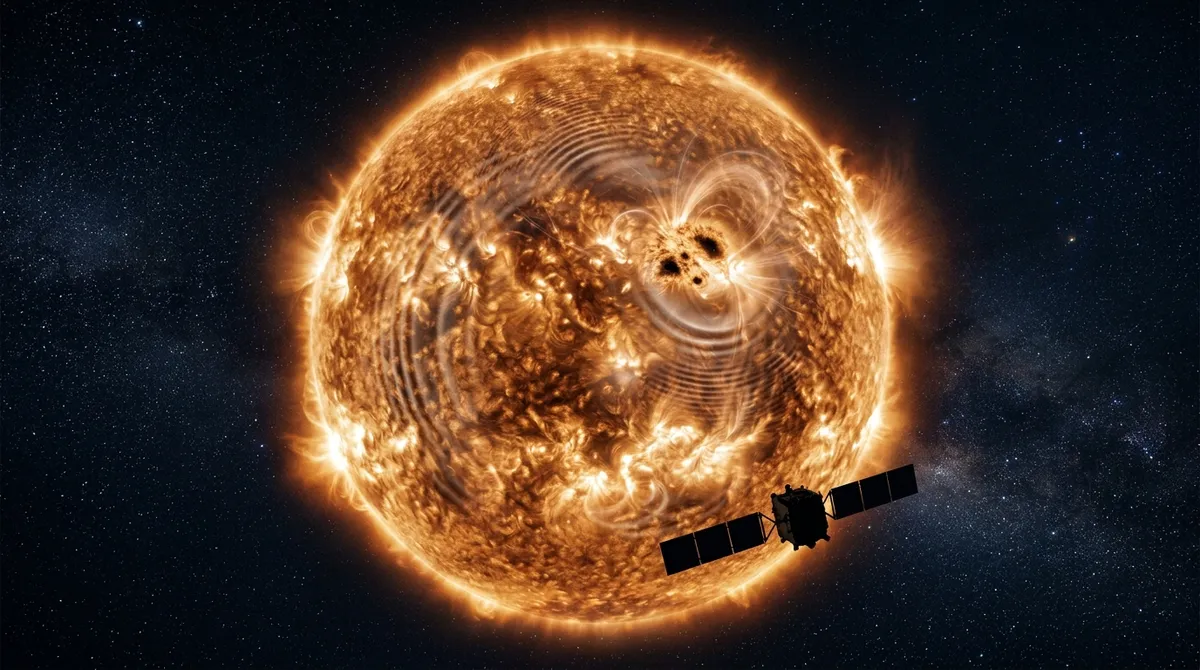
Scientists have discovered a way to "listen" to the sun that's revealing previously hidden changes in our star's behavior. Using a technique called helioseismology, researchers analyzed nearly 40 years of data from the Birmingham Solar Oscillations Network (BiSON) and uncovered something surprising: the sun's magnetic activity appears to be shifting closer to the surface across recent 11-year solar cycles.
This groundbreaking research suggests that traditional methods of measuring solar activity—like counting sunspots and monitoring solar flares—may be missing deeper changes happening inside our nearest star. According to the study, these internal changes due to the sun's "active biorhythm" have become increasingly "skin-deep" over the past four solar activity cycles.
Why Solar Cycle 25 May Be Deceiving Us
The findings have particular relevance for Solar Cycle 25, our current solar cycle that began in 2019. While surface indicators might suggest this cycle appears weaker than previous ones, the helioseismology data tells a different story. According to reports, Solar Cycle 25 is showing unusual internal signatures that suggest it may actually be stronger than traditional measurements indicate.
This disconnect between surface observations and internal solar dynamics raises important questions about how reliably scientists can forecast space weather. The implications extend far beyond academic curiosity—accurate space weather predictions are crucial for protecting the technology we depend on daily.
Listening to Solar Sound Waves
Helioseismology works by detecting and analyzing sound waves that travel through the sun's interior. Just as geologists use seismic waves to study Earth's internal structure, solar physicists can use these acoustic oscillations to peer inside the sun and understand what's happening beneath its visible surface.
These solar sound waves create patterns that scientists can interpret to reveal information about the sun's internal magnetic fields, temperature variations, and other physical processes. The BiSON network has been collecting this acoustic data for nearly four decades, creating an unprecedented record of the sun's internal behavior across multiple solar cycles.
The Technology Connection
Understanding these hidden solar changes matters more than ever for our technology-dependent society. Solar storms and space weather events can disrupt satellites, interfere with GPS navigation systems, cause communication blackouts, and even threaten power grid stability. When the sun's magnetic field lines tangle and snap, they can release enormous amounts of energy that travel toward Earth.
Satellites orbiting our planet are particularly vulnerable to these solar outbursts. High-energy particles from solar storms can damage sensitive electronics, degrade solar panels, and interfere with communication signals. GPS systems can experience accuracy problems when solar radiation affects the ionosphere, the charged layer of Earth's atmosphere that GPS signals must travel through.
Rethinking Solar Forecasting
The research suggests that scientists may need to reconsider how they approach space weather forecasting. If the sun's internal dynamics are changing in ways that surface observations don't fully capture, then forecasting models based primarily on sunspot counts and solar flare monitoring might miss important warning signs.
This hidden shift inside the sun could mean that space weather events might be more unpredictable than previously thought, or that current solar cycles might have different characteristics than historical patterns would suggest. The study indicates that magnetic activity moving closer to the sun's surface could affect how and when solar storms develop.
Looking Forward
As Solar Cycle 25 continues to unfold over the coming years, scientists will be watching both traditional surface indicators and these newly understood internal signatures. The combination of helioseismology data with conventional solar observations may provide a more complete picture of our star's behavior.
For the general public, this research highlights how much we're still learning about the sun despite centuries of observation. The ability to "listen" to stellar interiors represents a relatively new frontier in astronomy, one that's revealing that even our nearest star still holds surprises.
The findings emphasize the importance of continued investment in solar monitoring and research, especially as our society becomes increasingly dependent on space-based technology and electronic infrastructure that could be vulnerable to space weather events.