A Geological Cold Case Reopened
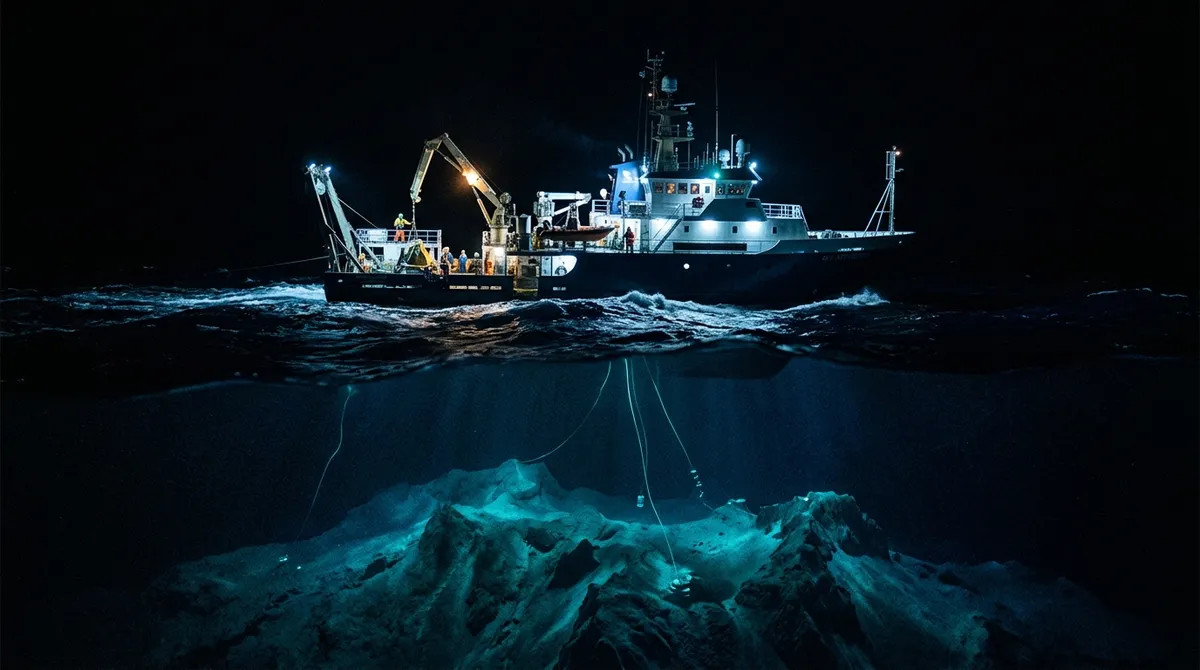
Deep beneath the North Pacific, between Japan and Canada, lies one of Earth's most mysterious geological features: Hess Rise, a massive volcanic plateau that has remained largely unexplored for over four decades. Now, a German-Japanese research expedition aboard the vessel SONNE is launching an ambitious mission to solve what scientists are calling a geological cold case.
The roughly T-shaped oceanic plateau represents one of the world's largest underwater volcanic formations, yet according to reports, it has barely been studied since 1980. This expedition marks a significant return to one of the Pacific's most enigmatic features, armed with modern technology and three competing theories about how this underwater giant came to be.
Three Theories, One Remote Plateau
Scientists face a fascinating puzzle: how did Hess Rise form? The research team will test multiple competing theories using an arsenal of sophisticated tools including seismometers, gravity and magnetic measurements, and advanced seafloor mapping technology.
The challenge of investigating this "lost" underwater volcanic world lies in the fact that scientists cannot directly observe the structures they're studying. Instead, they must rely on indirect methods to peer through miles of ocean water and sediment to understand the geological processes that shaped this massive formation.
Ocean Bottom Seismometers: Eyes in the Abyss
One of the key technologies being deployed involves ocean bottom seismometers, instruments that can map hidden Earth structures by detecting and analyzing seismic waves. These devices act as underwater ears, listening to the planet's subtle vibrations to reveal the internal architecture of oceanic plateaus like Hess Rise.
Gravity and magnetic measurements will provide additional clues about the plateau's composition and formation history. By analyzing how Earth's gravitational and magnetic fields vary across the region, scientists can infer the types of rock and volcanic structures hidden beneath the seafloor.
Echoes of the Cretaceous Volcanic Age
The timing of Hess Rise's formation is particularly intriguing to researchers. According to reports, scientists believe the plateau may be connected to the Cretaceous period, which was characterized as an age of extreme volcanism. During this era, massive volcanic events reshaped ocean basins and may have influenced global climate patterns.
Understanding Hess Rise could provide crucial insights into these ancient volcanic mega-events and their role in Pacific tectonic history. The new data gathered by this expedition could potentially reshape current understanding of how volcanic plateaus form and evolve over geological time.
International Collaboration in Deep-Ocean Research
The German-Japanese partnership behind this expedition reflects growing international collaboration in deep-ocean research. Such partnerships are becoming increasingly important as scientists tackle complex geological questions that require extensive resources and expertise.
This collaboration also demonstrates what researchers call "science diplomacy at sea," where international teams work together to unlock Earth's secrets in some of the planet's most remote locations.
The Hotspot Connection Mystery
One of the most intriguing questions the expedition hopes to address involves the relationship between hotspots and plateau formation. Scientists are investigating whether a single hotspot—a plume of hot material rising from deep within Earth's mantle—could have been responsible for building multiple giant Pacific plateaus.
This "one hotspot, two plateaus" hypothesis represents just one of the competing theories that researchers will test during their time at Hess Rise.
Solving Earth's Underwater Mysteries
The expedition to Hess Rise represents more than just a geological investigation—it's a testament to human curiosity and our drive to understand Earth's hidden processes. By combining cutting-edge technology with international cooperation, scientists are opening new chapters in our understanding of oceanic plateau formation and the dynamic processes that have shaped our planet's ocean floors.
As the SONNE makes its way to this remote corner of the Pacific, the research team carries with them the potential to solve a geological mystery that has persisted for decades. The answers they find could illuminate not just the history of Hess Rise, but the broader story of how volcanic processes have shaped the Pacific Ocean basin over millions of years.
The results of this expedition may finally provide the missing pieces needed to understand one of Earth's most impressive yet least-known geological features.