A Surprising Discovery in Endangered Species Conservation
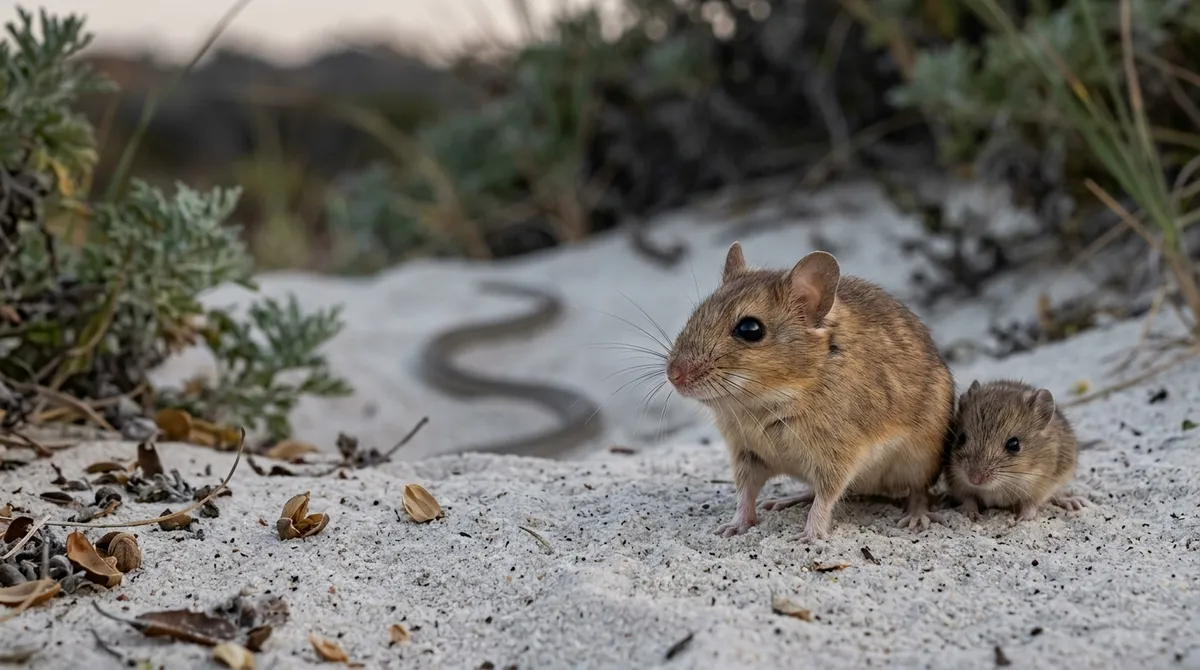
Researchers at San Diego Zoo Wildlife Alliance have made a groundbreaking discovery that could transform how conservationists prepare endangered animals for life in the wild. According to their findings, pregnant Pacific pocket mice that learn to fear snakes can pass that crucial survival instinct directly to their female offspring—no additional training required.
This represents the first documented evidence in an endangered mammal that maternal predator training can be inherited by the next generation, opening new possibilities for more efficient conservation breeding programs.
The Challenge of Captive-Bred Animals
Endangered species reintroduction programs face a persistent problem: animals raised in captivity often lack the predator awareness needed to survive in the wild. Traditional approaches require labor-intensive individual training of every animal before release, making large-scale reintroduction efforts costly and time-consuming.
According to reports, survival rates suffer when captive-bred animals encounter predators they've never learned to fear, undermining conservation efforts for critically endangered species like the Pacific pocket mouse.
A Sex-Specific Inheritance Pattern
The research revealed a fascinating biological quirk: only female offspring inherited their mothers' learned fear response. These young females displayed significantly more vigilant behavior around predators compared to offspring of untrained mothers.
This sex-specific effect raises intriguing questions about the relationship between stress, gender, and animal behavior. Why male offspring don't inherit the same fear response remains a mystery that scientists are eager to solve.
Three Competing Theories
Researchers have identified three potential mechanisms for how this maternal learning transfers to offspring, though the exact process remains unknown:
Prenatal Hormones: Stress hormones from fearful mothers might influence developing offspring in the womb, programming them to be more alert to dangers.
Maternal Behavior: Trained mothers may behave differently around their young, inadvertently teaching vigilant behaviors through example.
Odor Cues: Chemical signals from stressed mothers could condition offspring to associate certain scents with danger.
Understanding which mechanism is responsible could help scientists optimize this approach for other endangered species.
"Lazy Conservation" with Big Impact
This discovery suggests what researchers are calling a "lazy conservation" approach—training pregnant animals instead of each individual offspring could dramatically scale up reintroduction programs while reducing costs.
For the Pacific pocket mouse, a critically endangered species teetering on the brink of extinction, this efficiency gain could prove crucial. Rather than training dozens of individual animals, conservationists could focus their efforts on pregnant females, knowing the survival skills will transfer naturally to the next generation.
Broader Implications for Conservation
The findings extend far beyond a single species. If this maternal-learning model proves effective across different endangered mammals, it could revolutionize conservation breeding programs worldwide.
Many endangered species face similar challenges when transitioning from captivity to wild environments. According to reports, the ability to efficiently transfer predator awareness through maternal inheritance could improve survival rates across numerous reintroduction efforts.
Questions for Future Research
While this discovery offers promising applications, significant questions remain. Scientists still don't fully understand the biological mechanisms behind the inheritance, why it appears limited to female offspring, or whether the effect varies across different types of threats.
Researchers are also investigating whether this maternal inheritance occurs in other endangered mammals and how long the learned fear response persists in offspring as they mature.
A New Tool for Species Recovery
This research provides conservationists with a potentially powerful new tool in the fight against extinction. By working with natural biological processes rather than against them, breeding programs could become more efficient and effective.
For the Pacific pocket mouse and other critically endangered species, every advantage in preparing animals for wild release could mean the difference between recovery and extinction. This maternal inheritance of learned fear represents an unexpected ally in conservation efforts, demonstrating once again how understanding animal behavior can unlock innovative solutions to pressing environmental challenges.