Against All Odds: A Big Cat's Survival Story
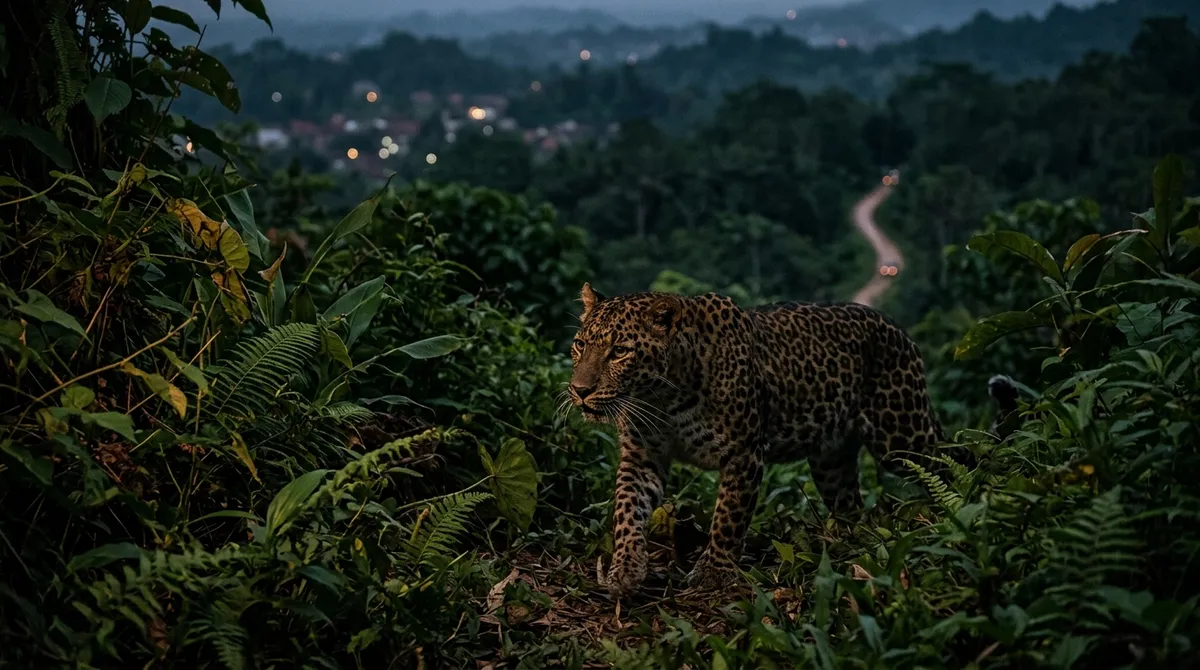
On Java, one of the world's most densely populated islands, an extraordinary conservation story is unfolding. The Javan leopard, with fewer than 350 individuals remaining, represents one of the planet's rarest big cats—yet somehow these magnificent predators continue to survive among more than 150 million people.
Recent research from the University of Twente reveals how these leopards have defied extinction through remarkable adaptability, challenging conventional wisdom about what wildlife really needs to survive in human-dominated landscapes.
The Power of Regenerating Forests
According to the study, which employed camera traps and spatial modeling techniques, the Javan leopards' survival strategy extends far beyond protected reserves. The research demonstrates that secondary forests and regenerating woodlands play a crucial role—serving as overlooked heroes in the conservation narrative.
These "second-rate" regenerating forests are doing heavy lifting that scientists previously underestimated. While pristine wilderness areas receive most conservation attention, the data shows that secondary growth forests matter just as much for the leopards' survival. The cats have learned to thrive in these recovering landscapes, relying on diverse prey species that inhabit both protected and regenerating areas.
Mapping the Path to Survival
The University of Twente research provides unprecedented spatial insights into exactly where conservation efforts could make the biggest difference. Using advanced modeling techniques, scientists have identified critical habitat corridors that link fragmented forest patches across Java's complex landscape.
These corridors represent lifelines for the leopard population, allowing genetic exchange and access to broader hunting territories. However, the study reveals a race against time as roads, railways, and expanding cities continue to fragment Java's remaining forests.
Beyond Protected Areas: A New Conservation Model
The findings challenge the traditional approach of relying solely on protected reserves to safeguard large predators. According to reports, the research demonstrates that conservation success requires thinking beyond fence lines—protected areas alone cannot save species like the Javan leopard.
This revelation has urgent implications for land-use planning across Java. The spatial data provides actionable guidance for decision-makers on where reforestation efforts, habitat corridors, and protective measures would yield the greatest conservation benefits.
Global Implications for Wildlife Conservation
As large carnivores vanish worldwide due to habitat loss and human pressure, the Javan leopard's story offers both hope and warning. The research positions Java as a microcosm of global wildlife challenges in human-dominated landscapes, where traditional conservation models must evolve or fail.
The leopards' resilience demonstrates that coexistence between humans and large predators is possible, even in extremely dense populations. However, this success story remains fragile—dependent on maintaining and expanding the network of corridors and secondary forests that currently sustain the population.
The Race Against Fragmentation
With Java continuing to develop rapidly, the window for implementing effective conservation measures is narrowing. The research emphasizes that every remaining forest patch, every potential corridor, and every reforestation opportunity could determine whether this rare big cat survives the next century.
The University of Twente findings provide a roadmap for preserving not just the Javan leopard, but potentially other endangered species facing similar pressures in crowded landscapes worldwide. The question now is whether human development and wildlife conservation can find sustainable balance before it's too late.
For the 350 remaining Javan leopards, the answer to that question will determine their species' fate on one of Earth's most challenging stages for wildlife survival.