Apes Choose Gossip Over Food
A groundbreaking revelation from two decades of great ape research has emerged from Leipzig Zoo's Wolfgang Köhler Primate Research Centre: great apes actively seek social information—essentially "gossip"—over food rewards. This finding challenges fundamental assumptions about primate priorities and suggests their social curiosity mirrors human behavior in unexpected ways.
The research, now compiled into EVApeCognition, a standardized database spanning 18 years of experimental data, is revolutionizing our understanding of primate intelligence and social behavior. According to reports, this methodological shift is closing the gap between captive and wild research settings while revealing the true extent of great ape cognitive abilities.
The Social Context Revolution
One of the most significant discoveries involves how personality and relationship history—not just immediate mood—drive cooperation and conflict resolution among great apes. This insight emerged as researchers moved away from traditional pair-based studies toward examining apes in larger group settings, which better reflects their natural social environments.
The shift to group-based research has unveiled what scientists call their "true social intelligence," revealing complex behavioral patterns that remained hidden when studying apes in isolation or pairs. These findings suggest that social context plays a crucial role in shaping cognitive expression, much like it does in human societies.
The Captivity Effect on Cognition
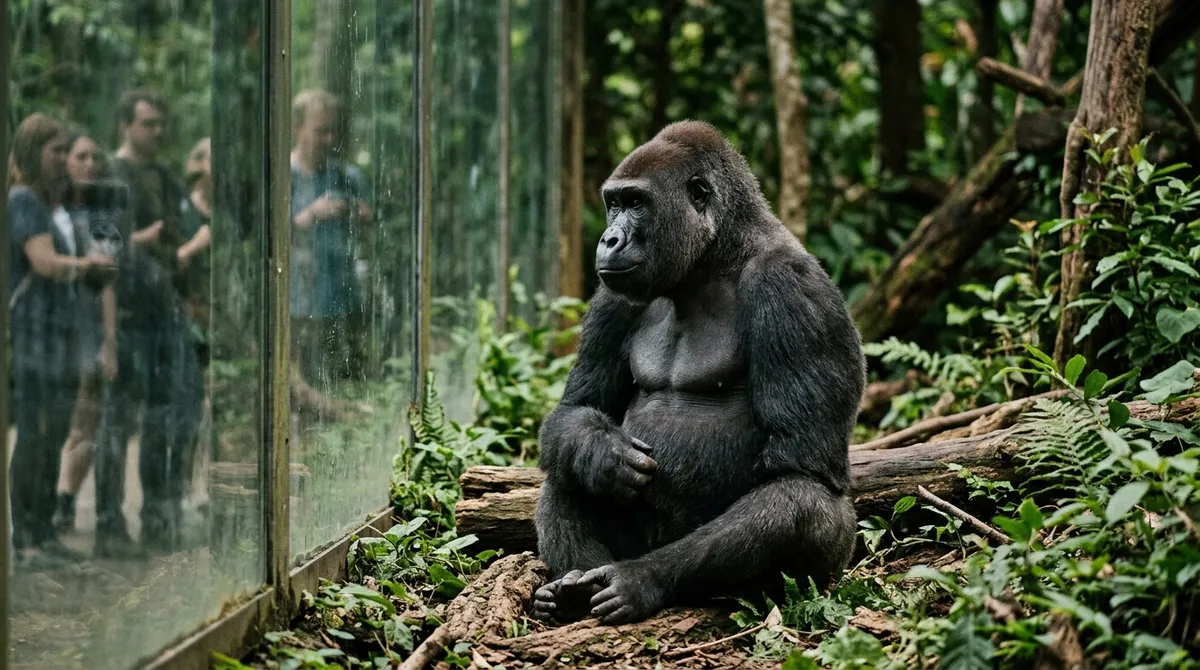
Researchers have identified what they term the "captivity effect"—a phenomenon where wild apes demonstrate more cautious behavior compared to their zoo counterparts. This discovery suggests that environment actively shapes cognition, raising important questions about how different settings influence the development and expression of intelligence.
The implications extend beyond academic understanding. As conservation efforts and ethical treatment of captive apes increasingly depend on comprehending their cognitive and social needs, these findings provide crucial insights for improving how we house and interact with apes in captivity.
Human-Like Belief Updating
Perhaps most remarkably, chimpanzees have been observed updating their beliefs in ways that mirror human decision-making processes. According to the research, chimpanzees weigh evidence strength before changing their minds, demonstrating sophisticated reasoning abilities that parallel human cognitive patterns.
This discovery challenges the traditional hierarchy of intelligence that places humans distinctly above other primates. Instead, it suggests a continuum of cognitive abilities with surprising overlaps between human and great ape mental processes.
Advanced Research Methods
The Leipzig Zoo research has employed cutting-edge techniques, including chimpanzees using touchscreen controls to navigate virtual forests and locate food rewards. These technological advances allow researchers to study complex cognitive processes in controlled yet engaging environments that maintain the apes' interest and motivation.
The EVApeCognition database represents a significant methodological advancement, standardizing data collection across nearly two decades of experiments. This comprehensive approach enables researchers to identify patterns and trends that would be impossible to detect in shorter-term or less systematic studies.
Implications for Conservation and Ethics
The timing of these revelations proves particularly significant as the scientific community grapples with evolving perspectives on animal consciousness and rights. Understanding that great apes possess sophisticated social intelligence, curiosity-driven behavior, and human-like reasoning processes has profound implications for how we approach their conservation and treatment.
These findings suggest that great apes require more complex social and cognitive stimulation than previously recognized, potentially reshaping standards for captive care and research protocols. The research indicates that their cognitive and social needs are far more sophisticated than traditional approaches have acknowledged.
Looking Forward
The field of great ape research is undergoing what researchers describe as a methodological revolution. By studying these remarkable creatures in more naturalistic group settings and employing advanced technological tools, scientists are uncovering layers of intelligence and social complexity that were previously invisible.
As this research continues to evolve, it promises to further blur the lines between human and great ape cognition, offering new insights into the evolutionary origins of intelligence, social behavior, and curiosity. The implications extend far beyond academic circles, potentially influencing everything from conservation strategies to ethical frameworks governing our relationships with our closest evolutionary relatives.