Breakthrough Discovery in Conservation Biology
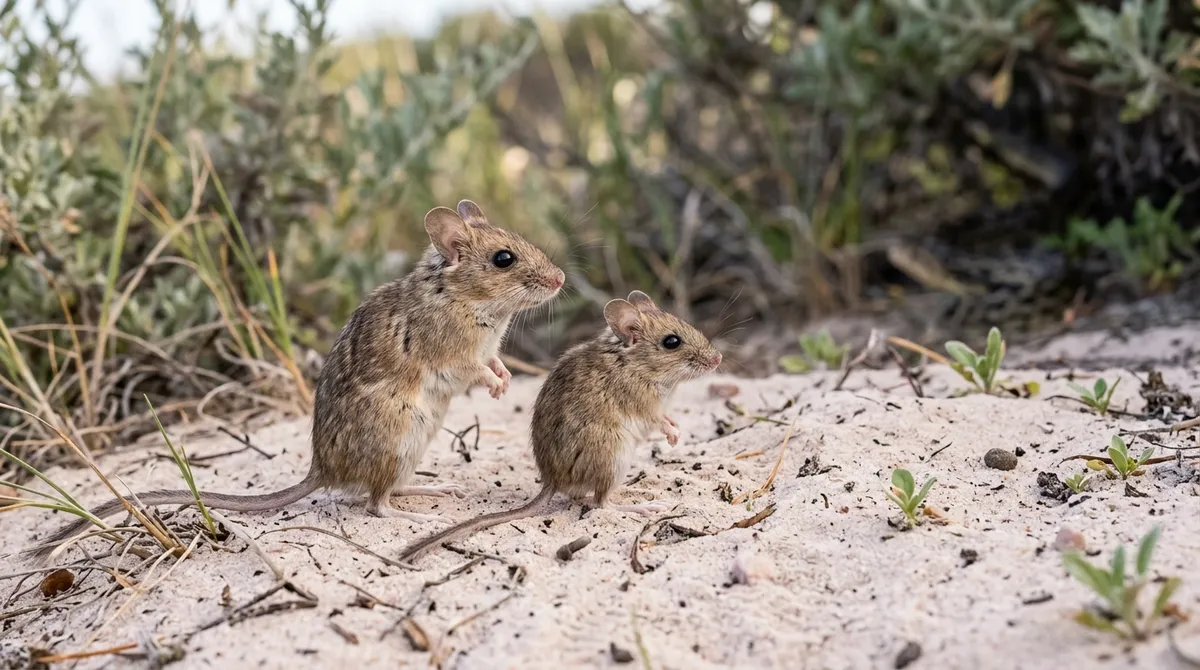
Researchers at San Diego Zoo Wildlife Alliance have made a remarkable discovery that could revolutionize how we prepare endangered animals for life in the wild. According to their findings, pregnant Pacific pocket mice trained to fear snakes successfully pass that learned fear to their female offspring, who then display heightened vigilance around predators.
This represents the first documented evidence in an endangered mammal that maternal predator training can be inherited by offspring—a finding that could transform conservation breeding programs worldwide.
The Pacific Pocket Mouse Problem
The Pacific pocket mouse faces critical extinction, making every conservation effort vital to the species' survival. Like many endangered animals raised in captivity, these mice typically lack the predator awareness necessary to survive in the wild, where threats like snakes pose constant danger.
Traditionally, conservationists have addressed this challenge through labor-intensive individual training programs, teaching each animal to recognize and avoid predators before release. However, this approach requires significant resources and time, limiting the scale of reintroduction efforts.
A Scalable Solution Emerges
The new research suggests a more efficient alternative: training pregnant mothers instead of their offspring. According to reports, female offspring of trained mothers exhibited more vigilant behavior around predators, demonstrating that the fear response had been successfully transmitted across generations.
This "lazy conservation" approach—as researchers might call this more efficient method—could dramatically reduce costs and increase the number of animals prepared for wild release. Instead of training dozens of individual offspring, conservation programs could focus their efforts on pregnant females, potentially scaling up reintroduction programs significantly.
The Mystery of Sex-Specific Inheritance
One of the most intriguing aspects of the discovery involves the sex-specific nature of the inheritance. According to the study, only female offspring inherited the fear response from their trained mothers. This unexpected finding raises fascinating questions about the relationship between stress, gender, and behavioral inheritance in animal populations.
The sex-specific effect suggests that whatever mechanism transfers the learned fear from mother to offspring operates differently based on the offspring's gender, though the exact reasons remain unclear.
Three Competing Theories
Researchers have identified three potential mechanisms that could explain how mothers transmit learned fear to their offspring, though the exact process remains mysterious:
Prenatal Hormones: Stress hormones released by fearful mothers during pregnancy might influence fetal brain development, essentially "programming" offspring to be more vigilant.
Maternal Behavior: Trained mothers might behave differently toward their offspring after birth, inadvertently teaching them to be more cautious through behavioral cues.
Odor Cues: Chemical signals from stressed or trained mothers could communicate danger information to their young, triggering heightened awareness.
Determining which mechanism—or combination of mechanisms—drives this inheritance will be crucial for understanding how to optimize the training process.
Broader Conservation Implications
The implications extend far beyond the Pacific pocket mouse. If this maternal-learning model proves effective across species, it could reshape endangered animal recovery efforts globally. Many conservation programs struggle with the challenge of preparing captive-bred animals for wild release, often seeing high mortality rates due to predator naivety.
According to reports, endangered species reintroduction programs have historically struggled because captive-bred animals lack predator awareness. This discovery offers a potential solution that could improve survival rates without the resource-intensive individual training currently required.
Future Research Directions
Scientists now face the exciting challenge of determining whether this phenomenon occurs in other endangered mammals and how to optimize maternal training protocols. Understanding the biological mechanisms behind behavioral inheritance could unlock new approaches to conservation that are both more effective and more efficient.
The research also raises broader questions about how learned behaviors pass between generations in wild populations, potentially offering insights into animal adaptation and survival strategies that extend beyond conservation applications.
For the critically endangered Pacific pocket mouse, this discovery represents hope that more efficient conservation methods could help pull the species back from the brink of extinction.