A Decade-Long Climate Puzzle Finally Solved
Ten years ago, Bradley Markle, an assistant professor at the Institute of Arctic and Alpine Research at the University of Colorado Boulder, stumbled upon a puzzling pattern buried in Antarctica's temperature records. What he discovered would challenge fundamental assumptions about how Earth's southernmost continent responds to climate change.
According to reports, new research reveals that Antarctica's regional temperature changes are governed more by the nonlinear greenhouse effect than by the traditional Planck response that scientists had long relied upon. This groundbreaking finding could reshape how climate models predict Antarctica's response to modern warming.
Why Antarctica Doesn't Warm Evenly
The key discovery centers on a counterintuitive phenomenon: Antarctica's warmer regions appear to warm or cool more dramatically than their colder counterparts. This uneven response has puzzled climate scientists for years, as traditional climate theory suggested temperature changes should be more uniform across the continent.
The answer lies in water vapor's powerful role as a greenhouse gas. As temperatures rise in warmer Antarctic regions, water vapor amplifies greenhouse trapping, creating a feedback loop that intensifies temperature changes. This nonlinear greenhouse effect means that small initial temperature differences can snowball into much larger regional variations.
Ancient Ice Holds Modern Climate Secrets
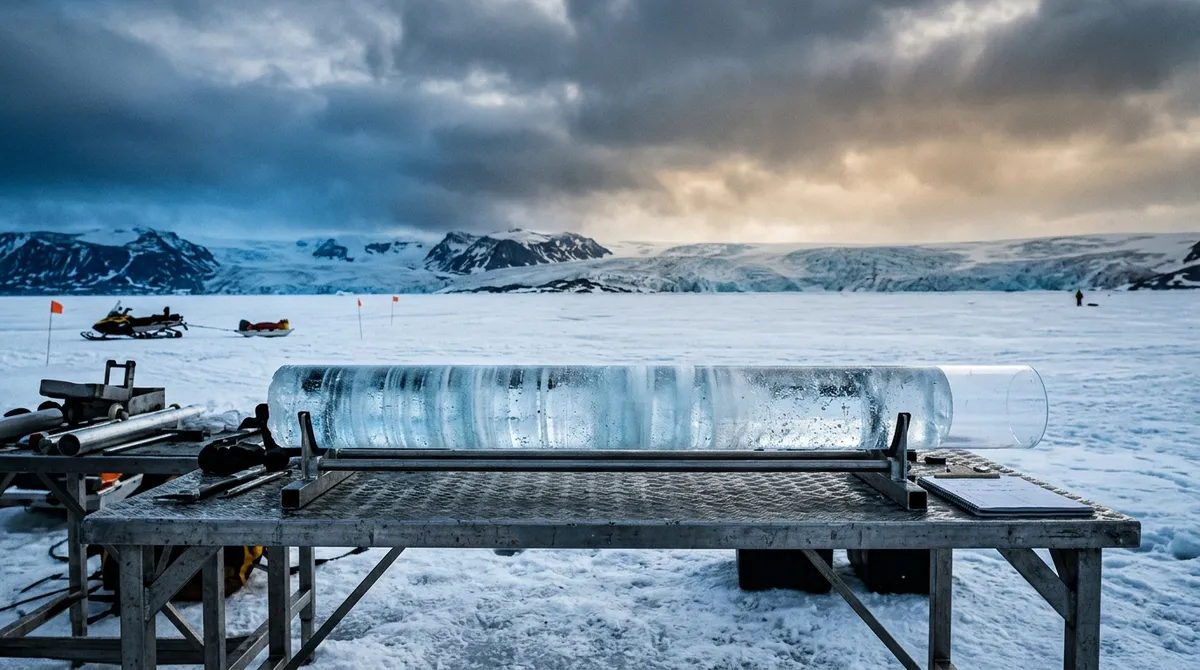
To solve this climate puzzle, researchers turned to one of Earth's most comprehensive climate archives: ice cores spanning 160,000 years. These frozen time capsules revealed hidden rules of the climate system that are playing out in real-time today.
The paleoclimate records showed consistent patterns of how different Antarctic regions responded to temperature changes over millennia. Warmer areas consistently exhibited more dramatic temperature swings, while colder regions remained relatively stable—exactly what the nonlinear greenhouse effect would predict.
Antarctica as Earth's 'Heat Exhaust Valve'
This research positions Antarctica as something of a "heat exhaust valve" for the global climate system. The continent's vast ice sheets and unique atmospheric conditions make it particularly sensitive to greenhouse gas concentrations, but not in the uniform way scientists previously assumed.
The warmer coastal regions and ice-free areas act as hotspots for climate sensitivity, potentially experiencing more extreme temperature fluctuations as global greenhouse gas levels continue to rise. Meanwhile, the frigid interior regions may remain relatively buffered from these changes.
Implications for Future Ice Sheet Predictions
As climate models attempt to predict Antarctica's response to ongoing global warming, this finding could fundamentally alter projections about polar climate dynamics and ice sheet stability. Understanding that warmer Antarctic regions are more sensitive to change helps explain historical ice sheet behavior and could improve predictions about future ice loss.
The research suggests that current climate models may be underestimating the potential for dramatic regional variations across Antarctica. Areas that are already relatively warm could experience accelerated warming, while the coldest regions might change more slowly than previously expected.
A New Framework for Polar Climate Science
This breakthrough represents more than just solving a decade-old puzzle—it provides a new framework for understanding polar climate dynamics. The research demonstrates how ancient climate records can illuminate processes happening today, bridging the gap between paleoclimate science and modern climate prediction.
The study also highlights the critical importance of regional climate analysis rather than treating Antarctica as a uniform system. As scientists work to understand how rapidly changing global conditions will affect the world's largest ice sheet, this nuanced view of Antarctic climate sensitivity becomes increasingly valuable.
By revealing how the greenhouse effect governs temperature changes across Antarctica's diverse landscapes, this research offers crucial insights for predicting the continent's role in future sea level rise and global climate patterns. The 160,000-year ice core record has effectively provided a roadmap for understanding Antarctica's climate future through the lens of its ancient past.